How Medaling with Friends works
It’s a race schedule you share with the people you actually run with. Three things make it different from a spreadsheet or a results site.
One
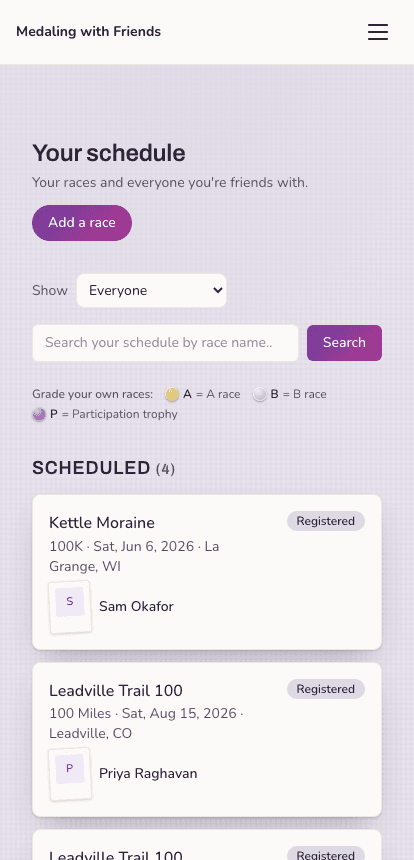
Your races, and your people’s races, in one list
Add a race and it lands on your schedule. Connect with someone and their races show up alongside yours, so “who else is doing Leadville” stops being a group-chat question.
Private by default. A race is visible to everyone, to friends, or to nobody — your call, per race. Nothing is public because you signed up.
Two
Who you showed up for, not just what you ran
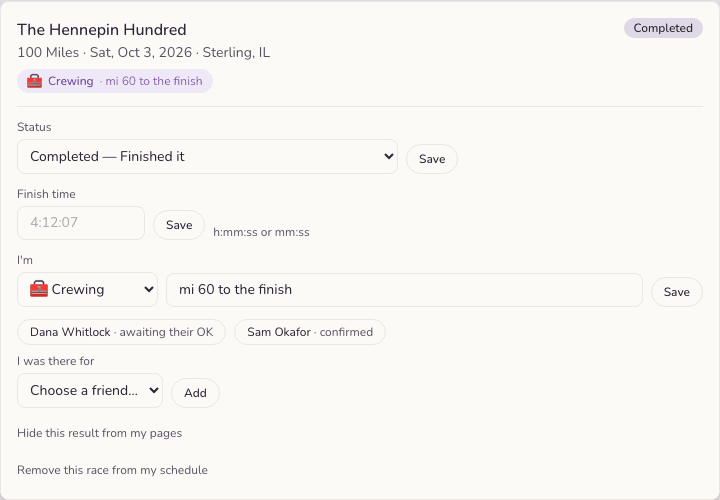
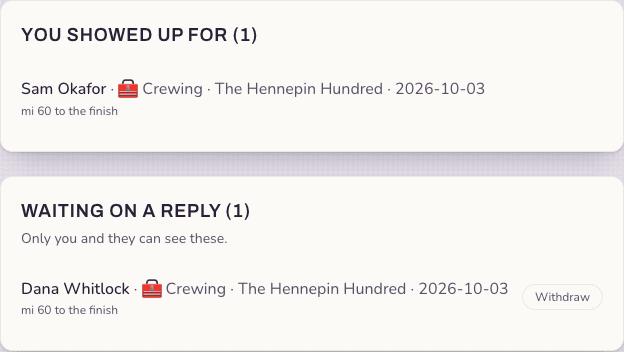
Half of ultrarunning is crewing and pacing, and nothing tracks it. You can mark a race as crewing, pacing, volunteering or spectating, and then say who you were there for.
They have to confirm it. Saying “I crewed for Sam” is a statement about Sam, so until Sam agrees, nobody but the two of you can see it. If they’d rather not be listed, they decline and that’s the end of it — you’re not told whether they said no or simply haven’t answered.
Three
Which races have said who is welcome
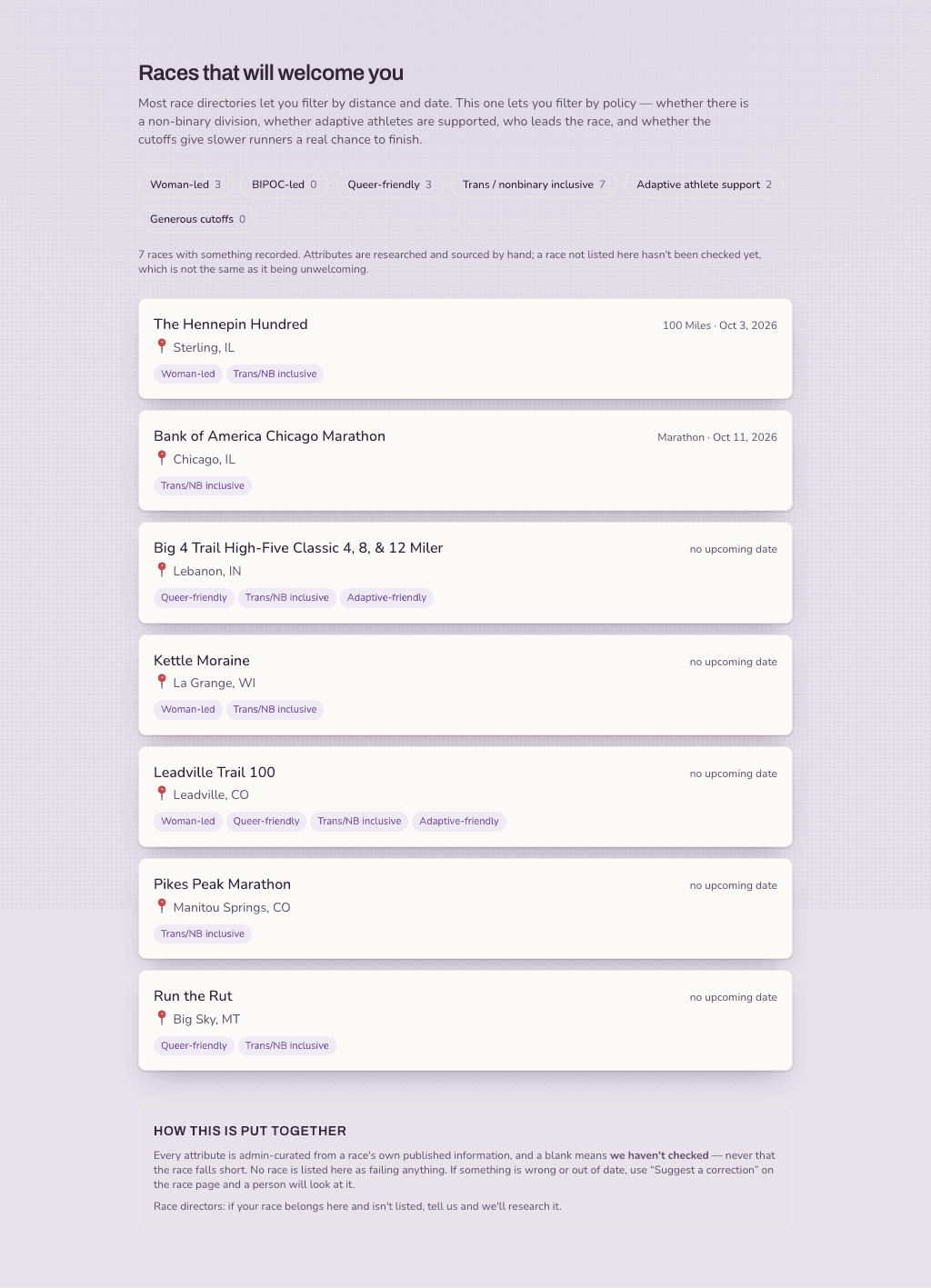
Every race listing tells you when and where. This one also records what a race has said about who it’s for — a non-binary division, adaptive-athlete provision, a generous cutoff.
Only things a race has actually stated are recorded. A blank means nobody has checked, and it says so — no race is ever listed as failing anything, because that would be publishing an accusation about a real organisation on the strength of missing data.
Who makes it
I do — one person, in my own time, paid for out of pocket and by tips. There’s no company here and no investor waiting on growth. What it costs to run, and who I am.